

Lakefront Living vs. Traditional Residential Living: Key Differences
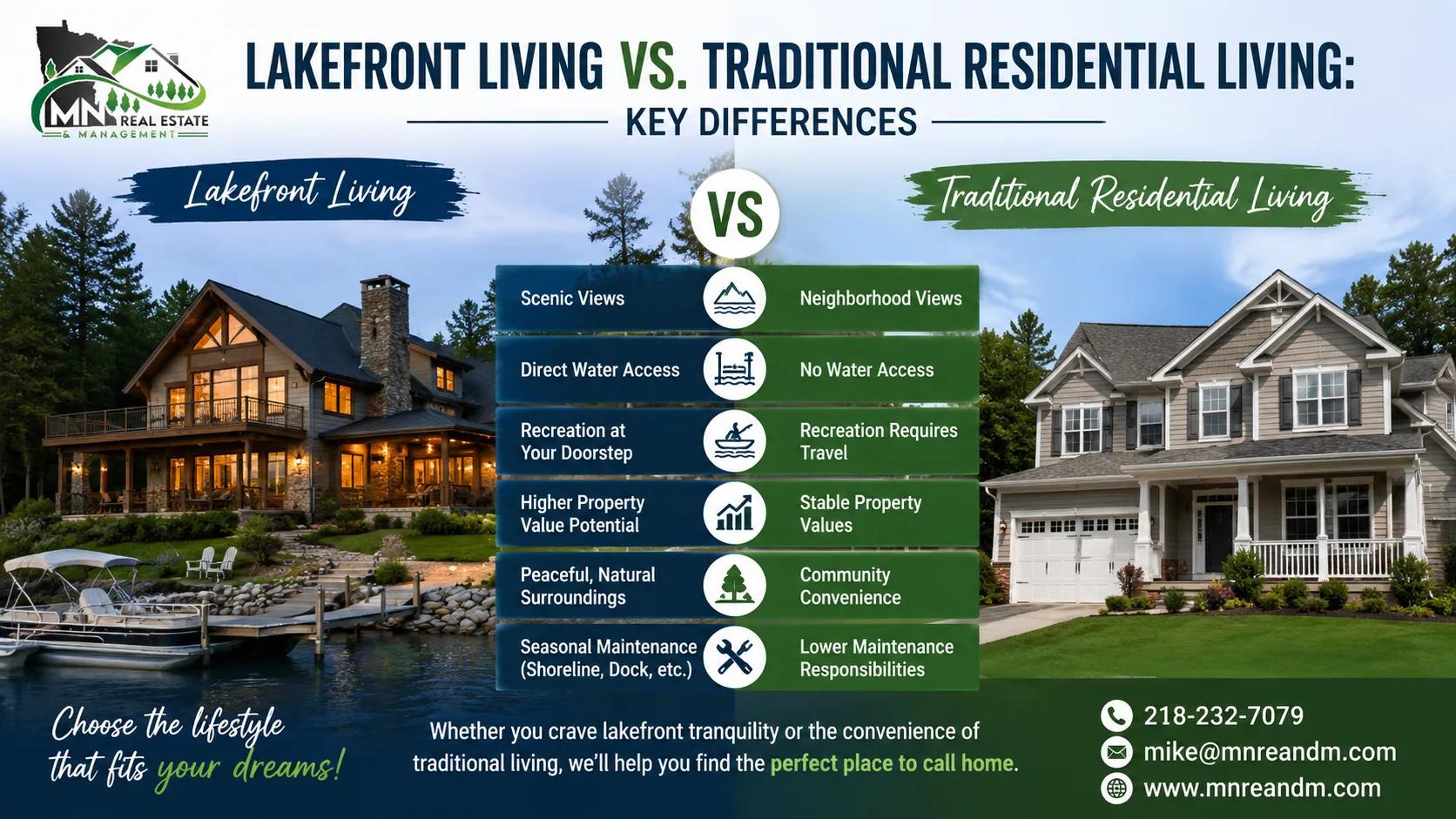
Choosing between a lakefront property and a traditional residential home is one of the biggest decisions buyers make in Minnesota. While both offer unique advantages, the right choice depends on your lifestyle, financial goals, maintenance preferences, and long-term plans. Whether you're looking for a peaceful retreat, a family home, or an investment opportunity through vacation home rentals in MN, understanding the differences helps you make a confident and informed decision.
Understanding the Appeal of Lakefront Living
Lakefront properties offer more than beautiful scenery. They provide a lifestyle centered around nature, recreation, and relaxation. From morning coffee overlooking the water to evenings spent boating or fishing, many homeowners value the unique experiences that waterfront living provides.
For buyers exploring Cross Lake homes for sale, lakefront properties often represent both a personal getaway and a long-term investment. Their limited availability and high demand frequently contribute to stronger appreciation over time.
Some of the biggest attractions include:
● Direct access to lakes and outdoor activities.
● Peaceful surroundings with scenic views.
● Greater privacy compared to many neighborhoods.
● Strong appeal for seasonal visitors.
● Excellent opportunities for family gatherings.
Traditional Residential Living at a Glance
Traditional residential homes focus on convenience, accessibility, and community living. These properties are commonly located near schools, healthcare facilities, shopping centers, restaurants, and employment hubs.
Unlike many vacation home rentals in MN, residential homes often require less seasonal preparation and provide easier year-round access. Buyers who prioritize daily convenience may find traditional neighborhoods better suited to their lifestyle.
Common advantages include:
● Close proximity to everyday amenities.
● Established neighborhoods.
● Lower seasonal maintenance requirements.
● Reliable municipal services.
● Easier commuting options.
Lifestyle Differences
One of the biggest distinctions between these property types is the lifestyle they create.
Lakefront living revolves around outdoor recreation. Homeowners often spend weekends kayaking, boating, swimming, fishing, or simply enjoying the peaceful environment. This slower pace attracts retirees, vacation homeowners, and families looking to escape busy city life. Buyers searching for Cross Lake homes for sale frequently prioritize these lifestyle benefits above everything else.
Traditional residential neighborhoods, on the other hand, emphasize convenience and routine. Parks, schools, sports facilities, and shopping districts are often only minutes away, making them ideal for families with school-aged children or professionals who commute regularly.
Investment Potential
Both property types have investment value, but they generate returns in different ways.
Lakefront homes often appreciate because waterfront properties remain limited in supply. Their appeal also creates opportunities for owners interested in vacation home rentals in MN, allowing them to earn seasonal income while enjoying personal use throughout the year.
Traditional residential homes generally provide stable appreciation driven by local employment, schools, and neighborhood development. Long-term rental demand also tends to remain consistent in growing communities.
When evaluating investment opportunities, buyers should consider:
● Property appreciation history.
● Local housing demand.
● Rental income opportunities.
● Maintenance expenses.
● Seasonal occupancy trends.
Maintenance Requirements
Maintenance expectations vary significantly between these two property types.
Lakefront homes face unique environmental conditions including moisture, changing water levels, shoreline erosion, docks, landscaping, and winter weather preparation. Owners involved in vacation home rentals in MN also need to maintain furnishings, guest amenities, and regular cleaning schedules.
Traditional homes generally involve more predictable maintenance tasks such as roofing, HVAC servicing, landscaping, plumbing, and exterior upkeep without the added responsibilities associated with waterfront ownership.
Privacy and Surroundings
Many buyers choose lakefront homes because of their peaceful surroundings. Instead of traffic and crowded neighborhoods, owners enjoy natural landscapes, wildlife, and open water.
Those researching Cross Lake homes for sale often appreciate larger lots, mature trees, and quieter environments that create a stronger sense of privacy. While neighboring cabins and vacation homes may become busier during peak seasons, many waterfront communities remain calm throughout much of the year.
Traditional residential neighborhoods offer a different type of community experience, with nearby neighbors, organized events, and easier opportunities for social interaction.
Property Value Trends
Lakefront real estate has historically remained desirable because waterfront land is limited. Demand often exceeds available inventory, helping many properties maintain long-term value.
Buyers considering Cross Lake homes for sale frequently view waterfront ownership as both a lifestyle purchase and a strategic real estate investment. Premium lake locations often attract buyers even during changing market conditions.
Traditional residential properties typically experience steadier appreciation influenced by local infrastructure, schools, employment growth, and neighborhood improvements.
Income Opportunities
A major advantage of lakefront ownership is the potential to generate rental income.
Many owners choose to participate in vacation home rentals in MN, allowing them to offset ownership expenses while the property is not in personal use. Professional management services often simplify guest communication, maintenance scheduling, pricing strategies, and property marketing.
Traditional residential homes also generate rental income, although leases are generally long-term and may not provide the same seasonal revenue potential available in popular vacation destinations.
Buying Considerations
Before making a purchase, buyers should evaluate more than just the property's appearance.
Important considerations include:
● Annual maintenance costs.
● Accessibility throughout the year.
● Waterfront regulations.
● Insurance requirements.
● Future resale potential.
● Intended personal use.
● Rental income possibilities.
● Long-term financial goals.
For buyers exploring Cross Lake homes for sale, understanding these factors helps ensure the property aligns with both lifestyle preferences and investment objectives.
Conclusion
Lakefront properties and traditional residential homes each offer distinct advantages that appeal to different types of buyers. While traditional neighborhoods provide convenience and consistency, waterfront homes deliver an unmatched lifestyle, strong appreciation potential, and additional income opportunities through vacation home rentals in MN. Buyers researching Cross Lake homes for sale should carefully evaluate their long-term goals, maintenance preferences, and investment priorities before making a decision. Choosing the right property means finding the balance between lifestyle, financial value, and future opportunities.